There’s a lot more on a long bank statement than only a simple ledger of transactions. Account notes, summaries, explanations and disclosures can be found in the information an accountant needs.
If the primary goal is to import transaction information into an accounting or spreadsheet system It may not be required to handle everything. Before creating the output, you must determine which pages are most useful.
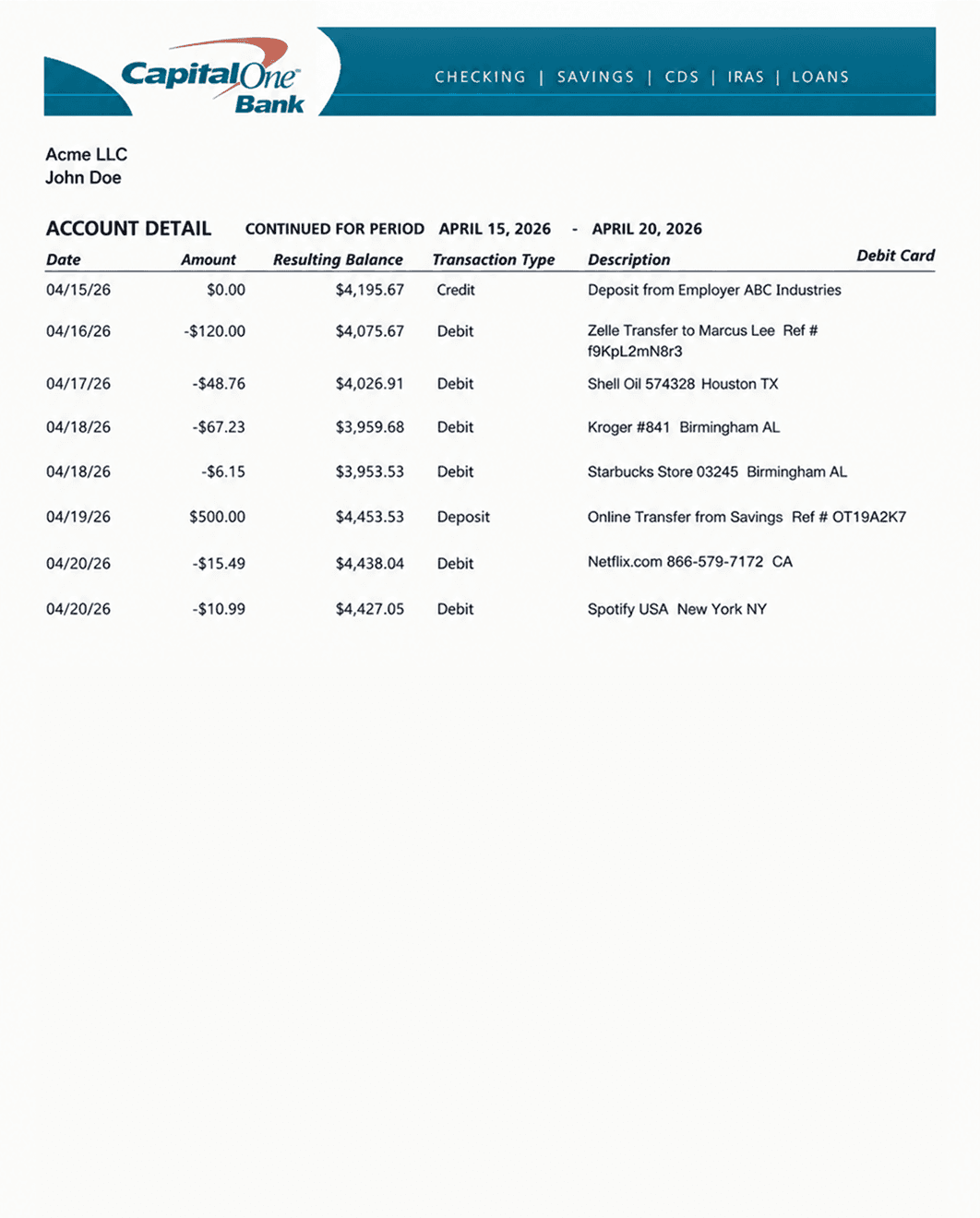
Image credit: docubrew.com
It’s not a sign of more data.
Imagine a company looking over the financial activity of a few months. The PDFs for the month could have 10 or more pages but only a tiny portion of the document will contain the required transaction tables to manage the accounting.
Manually copying these tables is a solution however it’s slow and introduces opportunities for mistakes in typing. Businesses are able to convert bank statements into Excel but only the pages that are relevant.
Docubrew’s page preview lets a user to review the page and choose what to process. It is possible to remove cover sheets, disclosures and other pages.
You’re in more control when you preview your first
Automation is most effective in situations where the user can inspect what’s happening.
Docubrew allows users to view the statement pages prior to finalizing the conversion. The program extracts the data directly from the original statement, instead of estimating the financial value.
If you are converting a bank statement to Excel this preview provides the opportunity to confirm that the appropriate pages have been selected. You can also review the extracted data prior to downloading the final result.
It’s a straightforward checkpoint but one that is crucial when financial records are involved.
The Export should be shaped by the Destination
The next question is what you will do with the transactions.
Excel is a good option when a bookkeeper needs to inspect rows, categorize data or manage the information in a spreadsheet. CSV is an option in the event that the data is going into another system. Docubrew also allows QBO output.
If someone is required to convert a bank statement into CSV format it is possible to create a CSV instead of constructing an Excel worksheet initially and then manually altering the formats.
Docubrew output can be used in conjunction with accounting platforms such as QuickBooks, Xero and FreshBooks and spreadsheets.
Scanned Paper Statements May Be a Part of the same Workflow
Conversion selective isn’t restricted to PDFs created digitally.
Sometimes older statements are only accessible as scans of paper. Docubrew offers OCR for PDF scans that allow those statements to be processed too.
It is extremely helpful when working on historic accounting projects where certain records have been digitally converted while others were directly scanned from paper. Instead of having two distinct workflows, documents can be processed through the same general conversion method and checked before export.
Processing locally, or using the Cloud
The final output of financial records is just as important as how they are dealt with.
Docubrew’s Windows Desktop application can convert documents locally on the client’s computer. The cloud option is designed for users who wish to process documents using the browser. Docubrew claims that the cloud option will automatically delete documents that have been converted and uploaded within 24 hour.
Ultimately, converting a bank statement to Excel shouldn’t mean feeding every page of every PDF into a tool and hoping the output is useful.
Start by looking at those pages that have the information you require. Look at what’s missing. Choose the format that fits the next task in accounting.
Sometimes, a smoother financial workflow begins not by processing more however, but rather by choosing to process less.