The restaurant owner looks at the sales and then at the bottom line before closing the report.
Sound familiar?
It might be a completely accurate report, but in focusing on just two figures, it leaves the majority of its value left to chance.
Good restaurant bookkeeping shouldn’t make proprietors more dependent on their accountant. They should feel more secure of their financials. It’s not necessary to spend the night completing invoices or master every accounting rule. It’s crucial to understand why the profit changed in relation to food and labor and which areas require attention next week.
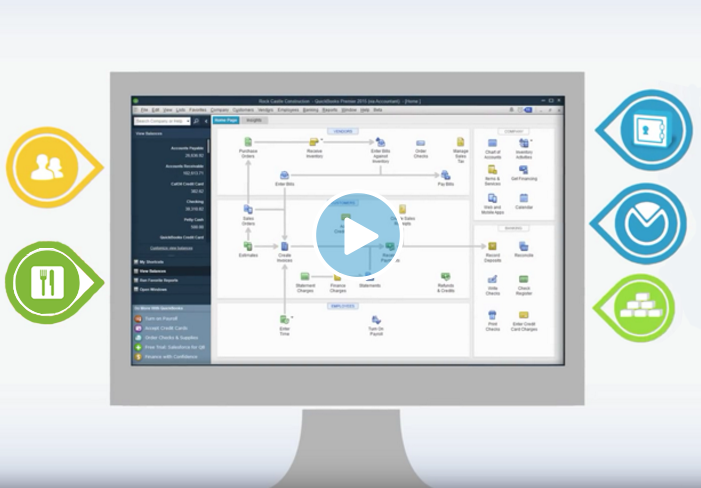
Bookkeeping Chef is a computer program that helps automate bookkeeping so users can focus doing other things and receive more precise financial reports.
Don’t stop at month-end Numbers. Start with the Weekly Numbers
A monthly P&L is important, however restaurants do not operate on a monthly basis. Managers schedule labor for this week. Chefs order food right now. Vendors change prices now.
Bookkeeping Chef’s weekly prime-cost reports are published alongside the financial statements for the month.
The primary cost is comprised of the cost of goods and labor and labor, two areas where an establishment can quickly progress. According to the data offered by Bookkeeping chef, prime costs account for around 60% of sales in restaurants.
If sales haven’t changed much however the price of prime is increasing. The percentage by itself does not give the answer. It provides the owner with a reason to look into the issue.
Did hourly work grow? Did overtime take place? Did food cost move? Was a vendor invoice uncharacteristically high? Did the mix of sales changed?
This is much more helpful than finding the same problem two weeks later.
Automate the repetitive work
DIY bookkeeping doesn’t have to involve manually transferring POS (point of sale) amounts onto spreadsheets.
Modern bookkeeping automation in restaurants can handle much of the repetitive movements of financial data. The service is able to integrate systems such as POS Payroll, QuickBooks, vendor platforms and inventory management.
Automatization is not the aim.
This is to decrease the manual data entry. This also helps keep current financial records so that owners can spend time on looking over information instead of gathering it.
That creates a different model of bookkeeping for restaurants. technology handles more of the mechanical aspects, while the restaurant owner is engaged with the financial meaning.
Ask more questions about P&L
If you stop thinking of the P&L as a test, it becomes less intimidating.
Begin with sales. Look at the cost needed to make those sales. Compare the food and beverage efficiency. Take into consideration the labor. Reduce operating expenses and look at what’s left.
Compare the different periods.
Something that lies between these two lines has changed if sales have increased, but profit has not. Ask what changed in the operation when food costs grew. If the labor percentage changed in the past, look at sales and staffing activity. Examine if the number appears strange, instead of assuming that the restaurant experienced poor times.
Bookkeeping Chef sends monthly P&Ls on five days. This lets owners review the latest results without having to wait for financial statements, which are often received months after the conclusion of an operating time.
For owners searching bookkeeping restaurant solutions, speed is useful but understanding is the bigger objective.
DIY doesn’t have to mean Self-Employing Everything
You don’t have to become the sole bookkeeper if you want to avoid giving the entire bookkeeping responsibility to a different person.
Owners can still be involved in the accounting process without needing to do everything manually.
The process could be as easy as utilizing automated system connections in order to keep the data flowing. However, it could be as complex and involved an analysis of the month’s P&L or a review of the weekly Prime-cost Report.
Specialized restaurant bookkeeping services could aid in this process by maintaining the book’s structure and assisting the owner to comprehend what the reports are saying.
This does not mean that the bookkeeper will be competent to handle all bookkeeping tasks.
An owner is someone who is able to have a discussion with the P&L regarding the business.
The aim of financial freedom is not to generate more reports, but rather to achieve financial freedom
Restaurants create a lot data. Another dashboard might not prove beneficial.
The true value is when an employee can look at a weekly prime-cost report and realize that something has was different, then look at the P&L and know the next steps to take.
Bookkeeping Chef’s strategy includes restaurant accounting automation, daily reports, monthly P&Ls and specific financial assistance for restaurants to make this process possible.
Automate repetitive tasks. Check the primary cost every week. Study the language of your P&L.
You don’t need to be an accountant professional.
It is crucial to know the financials of your restaurant prior to when you can become a proprietor.