The efficiency of a lift station can be established long before it is a concrete structure containing valves, pumps, and piping. The design is determined by numerous variables, including calculation of flow, elevation of the site the system pressure, the properties of wastewater as well as high-pressure conditions, access to maintenance, controls and future capacity.
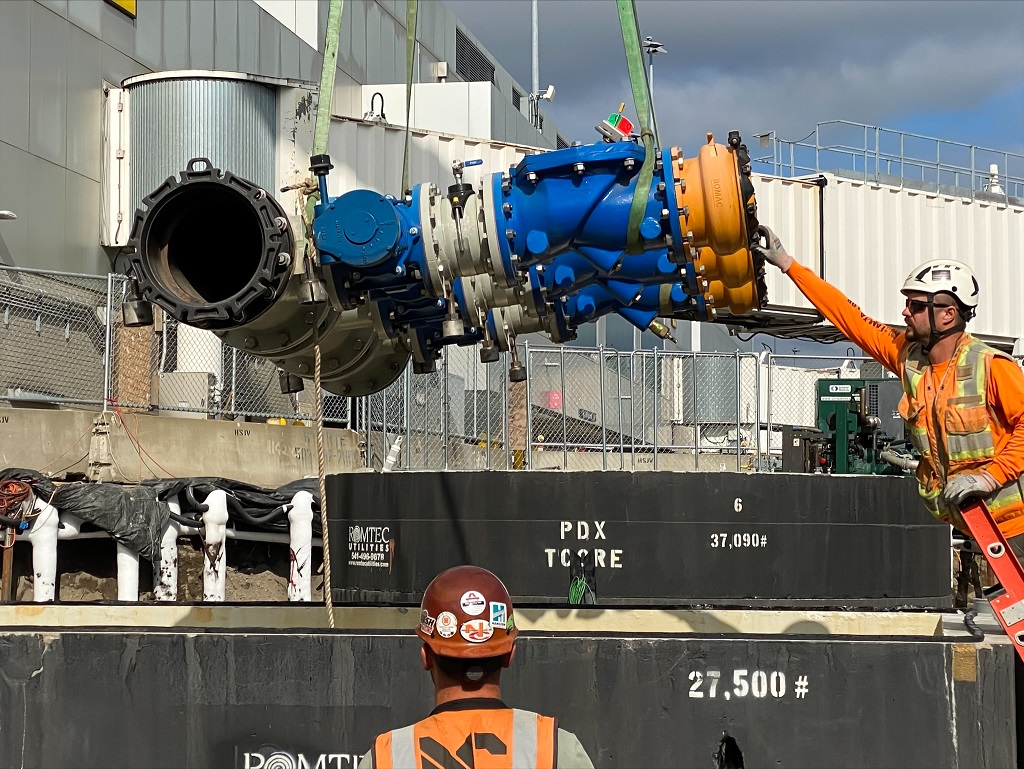
Image credit: romtecutilities.com
For project owners comparing the best lift station designers, the more useful question isn’t simply who can specify pumps. Who can translate site conditions into a practical, complete system that is easy to maintain, install, and run?
Gravity Has Limits
Gravity is often the most effective method of moving wastewater. However, terrain and building patterns can make this difficult. It is possible that the new residential, industrial or commercial locations are too large, far away or situated in regions where gravity sewer expansion isn’t possible.
A lift station can provide the required force mechanically to move wastewater from one point in the collection system to another. It is important to consider both the operational conditions of normal operation and those that are less convenient, such as the highest inflows, pump maintenance or equipment failure, or an increase in demand for the future.
The best companies in wastewater design should be able to evaluate the entire problem instead of just treating the station.
Existing infrastructure makes the problem more complicated
Construction isn’t always the only difficulty. While ensuring the vital infrastructure for wastewater municipalities are often required to upgrade or replace their aging stations.
Forcemains, wetwells electric services and controls along with the site’s boundary, as well as downstream infrastructure may limit the new design. Engineers must decide which elements are recyclable, what must be replaced and how the new components will integrate into the current system.
Romtec Utilities has experience in commercial, private and municipal applications as additionally, retrofit and renewal projects. This enables pumping systems be adapted to the specific ownership and operating requirements of each project.
Stormwater Follows Different Rules
The most skilled designers of stromwater systems using the search terms provided must resolve a completely different hydraulic problem. Stormwater systems can experience dramatic fluctuations in volume due to rainfall, drainage capacity and discharge rates allowed.
For example, a station which serves as a detention zone might need to hold the runoff before pumping it out at a controlled speed. Engineers should consider the head and flow conditions, environmental requirements, flood-management objectives as well as the features of the drainage system for which they are receiving.
Prefabrication can be used to shift the work off the site
Complex field assembly introduces opportunities for scheduling conflicts, installation errors changes, delays. Romtec Utilities uses substantial prefabrication prior to equipment arriving at the location of the project.
Completing more assembly and quality-control tasks in a controlled setting can reduce the amount of construction needed in the field. Romtec Utilities’s approach to projects can cut down on the time it takes to install certain types of installations.
Our commitment to engineering success extends to the commissioning process.
The installation of all components does not make a station stable. Romtec Utilities is an installation advisor and will follow the process of construction from startup to control-panel checking, pump operation testing the system and staff education. The documentation also includes information that operators could refer to when they maintain the system or thinking about future expansion.
People who want to find the most talented designers for lift stations should be aware of this last stage. A successful engineering project must be more than a few drawings that are acceptable. The station owner should leave with a functioning system, well-trained personnel, helpful documentation and equipment designed to meet the daily operational requirements of the station.