A company is awarded the contract for a significant amount. The production requirements for the month increase but the company isn’t equipped with more space, employees with experience, or extra hours during the day. Although adding another shift may temporarily boost production, it could be the cause of additional labor or supervision, as well as additional training and demands for quality-control.
These circumstances reveal an crucial reason for robot automation. It’s not just about replacing human beings with an automated machine. A suitable application can alter how manufacturers use their production capacity.
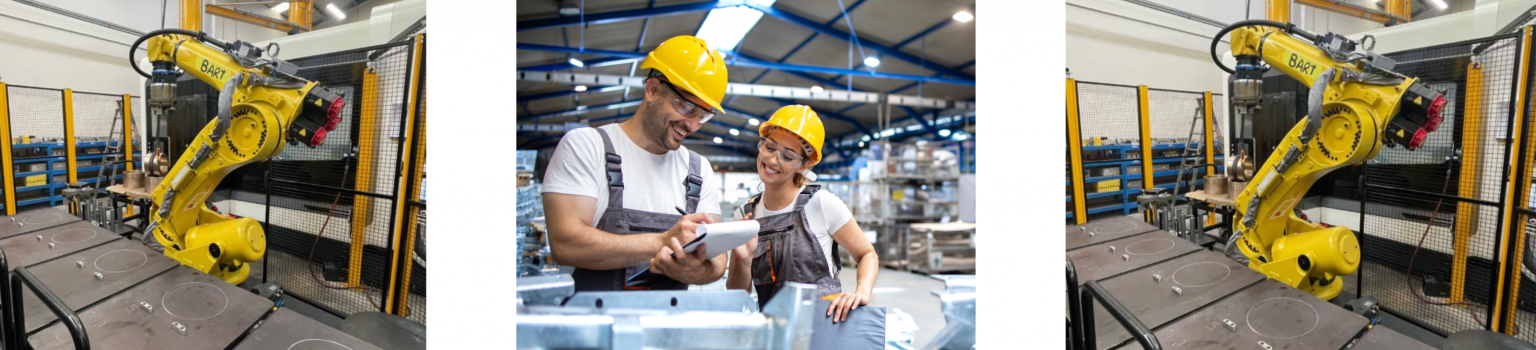
Image credit: automatedsolutions.com.au
Check out the amount of time that is lost between the products
Inefficient manufacturing is not always apparent. Suppose an operator spends 15 seconds arranging a part for 10 seconds, then another 10 seconds applying material, and then a few seconds transferring it to the next process. The time difference could seem minor for a single part. The seconds add up when multiplied by thousands.
The waste material that is discarded is not different. Same goes for the waste material.
The businesses that are looking into robotic automation Australia can benefit from studying these small repeated losses prior to decide what equipment to purchase. The analysis provided by ASA is designed to pinpoint bottlenecks and quality issues, as in addition to waste and other constraints within a project.
A Robot must be able to integrate the Process Around It
The choice of a robot is just one option in the engineering process. Tools, guardings, controls, sensor, conveyors and fixtures may also be required. Engineers must consider the reach and payload of the robot while making decisions about how the robot is going to move through its workspace and interact with the environment around it.
ASA provides concept development, system design, CAD simulation, and offline programming as part of its approach to FANUC robotic automation. Engineers can investigate system configurations and estimate cycle times before the final system is put on the factory floor. This is particularly beneficial in situations where space is not available or if new robotics are required to integrate with a production line that is already in place.
The importance of repeatability in painting and dispensing
Controlled movement is especially important for certain manufacturing processes. Imagine coating hundreds, or thousands of parts. It’s not enough to finish each part quickly. The distance, movement rate, and even the application needs to remain controlled at the beginning of the production process to the final.
ASA has specialists who work on painting and dispensing applications across a range of industries including automotive as well as aerospace. In these environments, industrial robotic automation can offer repeatable programming and reduce exposure of employees to physically demanding and potentially dangerous processes.
The reduction of waste and the increase in productivity is possible through better control.
Even after the installation, the system still requires people
Automation does not eliminate the requirement for expert manufacturing. Automation can alter the capabilities needed to operate and maintain the manufacturing process.
Employees must be able to detect abnormal behavior and identify problems, as well as carry out the correct maintenance. The production needs can change over time, which means that procedures and protocols will need to be adapted.
ASA provides training on-site for safe operation, programming, troubleshooting, as well as mechanical and electrical maintenance. The company also provides servicing and ongoing support to monitor the condition of equipment and to address issues that may arise during the equipment’s operational duration.
Capacity is about more than just getting faster work done
For Australian producers, expanding capacity doesn’t necessarily mean purchasing an additional building or increasing the amount of labor required to perform repetitive tasks. It’s sometimes more beneficial to inquire about whether the production process can be modified.
ASA has been creating and integration of automation systems since 2002, supporting manufacturers in Australia as well as projects across the globe. The approach combines needs analysis and engineering with simulation FANUC robot integration Training, and servicing.
Automation is not the goal. A good system will give a manufacturer something measurable in return more dependable production, consistent quality, safer processes, less waste, or more capacity from the factory that it currently operates.